

Working with Southeast Asian Bagasse Tableware Suppliers: Compliance Risks, Capacity Checks and Sourcing Tips
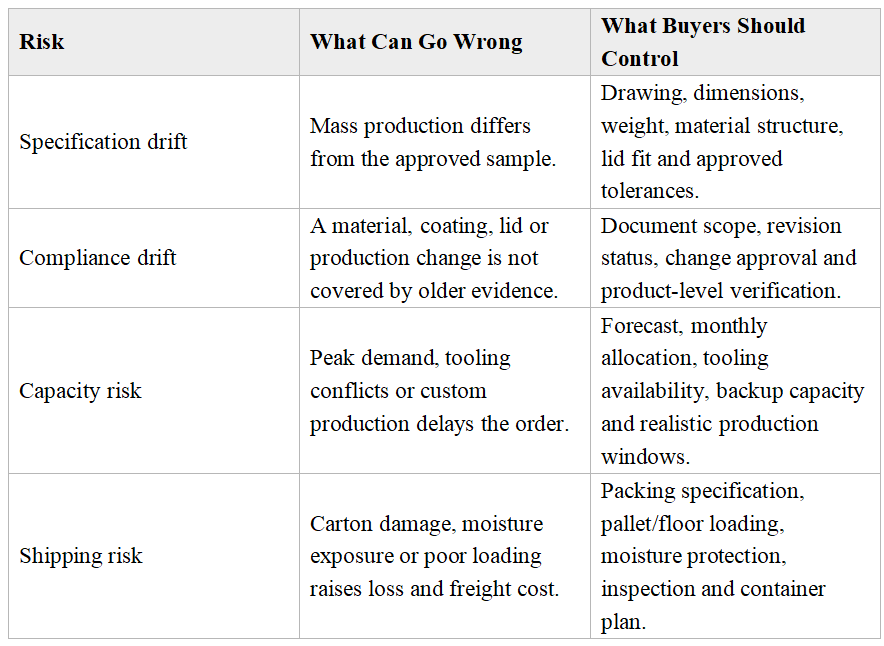
• The biggest sourcing risk after supplier selection is specification drift: mass production must stay aligned with the approved sample, drawing, weight, dimensions and material structure.
• Compliance evidence should be managed as a change-control process. A new coating, lid, ink, factory or formulation may change which reports or certificates remain applicable.
• Capacity should be planned through forecasts, tooling availability and monthly allocation rather than judged only by a quoted lead time.
• Packing, moisture protection, pre-shipment inspection and container loading can materially affect landed cost and delivery performance.
Southeast Asia offers useful sourcing options for sugarcane bagasse tableware, but a successful first sample does not guarantee a stable long-term supply program. Once a supplier has been selected, buyers need controls that keep product specifications, compliance evidence, production capacity and export execution consistent across recurring orders.
For distributors, restaurant groups and private-label buyers, Grizzlies approaches this as a factory-direct manufacturing problem rather than a one-time purchasing transaction. Its bagasse tableware manufacturing range is supported by OEM/ODM development, sample approval, production planning and quality-control processes designed for repeat bulk supply.
Lock the Specification Before the First Bulk Order
Before a purchase order becomes a recurring program, convert the approved sample into a controlled specification. The file should identify the product code, dimensions, nominal weight or agreed tolerance, compartment layout, fiber color, surface treatment, lid combination, packing method and any custom embossing, printing or mold features.
This matters because small changes can affect stackability, lid engagement, grease resistance or carton efficiency even when the commercial product name stays the same. Buyers should define who can approve revisions and how an updated sample is linked to the new production specification before the change reaches mass production.
Treat Compliance as a Change-Control Process
A compliance file should match the exact SKU and finished structure, not just the supplier name. Food-contact records, PFAS-related evidence, compostability certification and other market-specific documents may apply to different product scopes. One certificate should not be treated as automatic coverage for an entire catalog.
For recurring orders, the important question is what happens when something changes. A revised barrier coating, different lid, printing system, formulation or manufacturing site can require document review. Procurement teams should require notification of relevant changes before production and keep the approved product specification connected to the current supporting evidence.
Reserve Capacity Instead of Asking Only for Lead Time
A quoted lead time is only a snapshot. Buyers with recurring demand should discuss monthly forecasts, order frequency, tooling availability, seasonal peaks and the difference between standard existing-mold items and new custom projects. A 40HQ program containing several standard SKUs may need a different production plan from a single customized mold project.
For higher-volume programs, ask how much capacity can be allocated to the account, how schedule changes are handled and whether alternative forming lines or production bases can support continuity. Rolling forecasts also help the manufacturer plan pulp, cartons, lids and other inputs before a peak-order window becomes urgent.
Control Packing and Ocean-Freight Risk
Molded-fiber packaging is lightweight but sensitive to compression, humidity and poor container utilization. Instead of applying one universal moisture limit to every product, buyers should agree application-appropriate storage and shipment controls, carton strength, inner protection, pack count and inspection criteria.
Pre-shipment review can include appearance, dimensions, weight, pack count, carton labeling, lid compatibility and agreed performance checks. For container orders, compare floor loading or pallet loading, mixed-SKU planning and carton utilization because inefficient packing can erase part of the saving created by a lower unit price.
How Grizzlies Supports Recurring Supply Programs
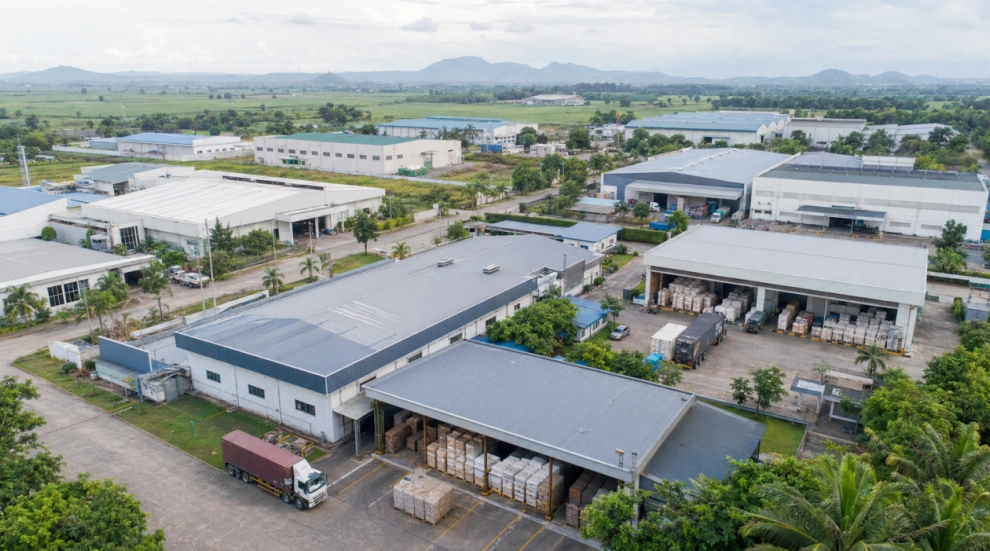
Grizzlies combines 15+ years of OEM/ODM manufacturing experience with 11 production bases, including a factory in Thailand, 280+ automated machines and capacity of up to 200 × 40HQ per month. Its Thailand manufacturing presence also gives international buyers access to a reliable Thailand manufacturer within the group’s broader production network, supporting more flexible sourcing, diversified supply and stable order fulfillment. For buyers, these capabilities are most useful when they translate into production redundancy, tooling support, quality-control resources and the ability to scale an approved product into recurring container orders.
The company supports standard and customized plates, bowls, trays, clamshells and bagasse food container formats, together with mold development, embossing, private-label packing, barrier options, samples, mixed-SKU planning and bulk production coordination. For long-term programs, buyers can discuss forecast demand and QC requirements directly with the manufacturing team instead of routing every technical change through a trading layer.
What to Send Grizzlies for a Supply Program Review
• Target product or reference SKU, dimensions, capacity and lid requirement.
• Estimated monthly consumption, trial quantity and expected container-order frequency.
• Destination country or port, preferred Incoterm and required delivery window.
• Customization needs such as mold changes, embossing, printing, barrier structure or private-label packing.
• Target-market compliance documents, sample tests and pre-shipment inspection requirements.
With this information, the Grizzlies team can review product fit, sample needs, production planning and quotation requirements before the program is scaled.
The strongest sourcing program is not the one with the lowest first quote. It is the one that can repeat the approved specification, keep documents current, reserve capacity and protect goods through export delivery. That is the basis of a resilient bagasse supply program.
Shenzhen Grizzlies Industries Co.,LTD
Shenzhen Grizzlies Industries Co.,LTD
+ +86 137 1519 2986
email us here
Legal Disclaimer:
EIN Presswire provides this news content "as is" without warranty of any kind. We do not accept any responsibility or liability for the accuracy, content, images, videos, licenses, completeness, legality, or reliability of the information contained in this article. If you have any complaints or copyright issues related to this article, kindly contact the author above.
